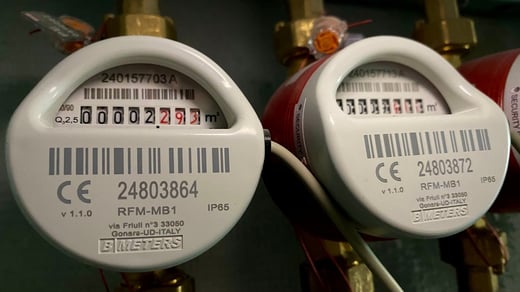
How IoT energy management helps logistics warehouses cut OPEX and CO2.
Why logistics warehouses need IoT energy management now
Logistics warehouses are under pressure from all sides. Customers expect faster delivery times and tighter service levels, while energy prices, grid constraints and decarbonisation targets squeeze margins. Chilled and frozen facilities are particularly exposed: refrigeration, HVAC, lighting and battery charging for material-handling equipment combine to create substantial electricity bills and emissions. Yet in many networks, leaders still see only aggregated monthly invoices and high-level building-management-system (BMS) data, with limited understanding of which zones, systems or behaviours drive consumption. IoT energy management offers a path from this opacity to actionable insight.
By combining sub-metering, connected sensors and cloud analytics, logistics operators can move from a flat, site-level view of kWh to a granular picture of energy use by circuit, zone, shift and process. This allows them to understand whether HVAC, lighting, charging or automation is driving demand at each site—and, crucially, what can be changed without compromising service quality or product integrity. Real-world projects demonstrate the potential impact.
A multi-site manufacturing and warehousing company that implemented a real-time IoT energy management system using smart meters, edge gateways and a cloud dashboard achieved a 28% reduction in energy costs by cutting peak-demand penalties and uncovering inefficient equipment cycles.
In another example, a logistics warehouse used integrated lighting controls and advanced monitoring to quantify kWh per aisle, shift and pallet, revealing that night-time consumption was almost equal to daytime use despite far lower throughput). Once managers saw that lighting and HVAC were running at full power in empty zones, they adjusted schedules and setpoints, delivering quick savings without new equipment.
For Nextbitt’s customers—multi-site operators in logistics, retail and regulated cold-chain sectors—IoT energy management aligns directly with strategic priorities. It supports OPEX and CAPEX optimisation by revealing which assets drive costs and where retrofits will have the biggest impact. It strengthens compliance with ISO 50001 and ISO 55001 by providing live data on significant energy uses and asset performance. And, when combined with Nextbitt’s sustainability analytics, it generates the audit-ready evidence needed for CSRD and ESRS, turning warehouse energy efficiency into a measurable contribution to broader climate and ESG goals.
Designing an IoT energy management stack for logistics sites
Designing an IoT energy management stack for logistics warehouses starts at the edge, where energy is used and wasted. In most logistics portfolios, a small set of loads dominate consumption: HVAC and refrigeration in temperature-controlled areas, lighting across large floorplates and racked aisles, battery charging for forklifts and pallet trucks, and process equipment such as conveyors, sorters and automated storage and retrieval systems.
The first step is to identify these major uses at each site and define a metering and sensing strategy that can separate them from the background. A practical approach combines upgraded main meters with sub-metering and targeted sensors. Main incoming meters provide the big picture and help track contractual limits and demand charges. Sub-meters on HVAC/refrigeration boards, lighting circuits and charging infrastructure reveal how energy is split between core systems.
In some cases, dedicated meters on large equipment—such as refrigeration racks or high-capacity chargers—add extra visibility. Academic and industry case studies highlight how focusing on the top 10–20% of loads can reveal most savings opportunities, from inefficient schedules to unexpected baseloads. Once meters and sensors are in place, an IoT platform aggregates readings and applies a consistent data model across sites. Each meter and sensor is tagged with site, zone, equipment type and, where relevant, temperature-control class or operational role (for example, cross-dock, ambient storage, chilled pick faces, office).
Time-series data is normalised and enriched with contextual information such as weather, operating hours, shifts and throughput (pallets, orders, picks). This context is what turns raw data into insight: a spike in kWh during a heatwave may be expected; a flat baseload at night that does not vary with volume almost certainly signals wasted energy. A real-world example from a logistics facility illustrates the impact. By integrating lighting controls and energy monitoring, one operator was able to track kWh per aisle, shift and pallet, uncovering that night-time energy use was nearly equal to daytime consumption despite much lower activity. Dashboards made it visible that lighting and HVAC were running at full power in empty zones, often due to outdated rules and habits.
Once these insights were surfaced, simple changes to schedules and setpoints delivered immediate savings without CAPEX. To make this sustainable, analytics and automation must connect to execution. That is where an Enterprise Asset Management (EAM) platform like Nextbitt becomes critical. When the IoT platform detects anomalies—such as abnormal night-time loads on a lighting board, simultaneous heating and cooling in a dock area or spikes in refrigeration energy unrelated to ambient temperature—it should create structured work requests tied to specific assets or zones. The EAM routes these to maintenance, operations or energy teams with clear priorities and expected impact. Over time, this closed loop turns isolated optimisations into a continuous-improvement process that reduces kWh per pallet, improves comfort and extends equipment life, all while generating the traceable data needed for ISO 50001, ISO 55001 and CSRD reporting.
Roadmap: from pilots to portfolio-wide IoT energy management
Turning IoT energy management from a handful of pilots into a portfolio-wide capability requires as much attention to governance and change management as to sensors and software. A phased roadmap—pilot, standardise, scale—helps logistics operators capture early savings and build confidence before expanding across the network. In the pilot phase, choose a small cluster of sites that represent your portfolio: for example, one large ambient warehouse, one temperature-controlled distribution centre and one cross-dock facility. For each, baseline current energy use (kWh and cost per pallet, per order or per square metre), map existing meters and controls and define a limited set of use cases: reduce night-time baseload, optimise HVAC and refrigeration schedules, improve lighting control and rationalise charging practices.
Within a few months of sub-metering and analytics, many organisations discover 10–30% savings opportunities that require little or no CAPEX—simply by aligning equipment operation with business hours and challenging inherited "safety margins" that keep systems running when they are not needed. The standardisation phase turns lessons learned into a reusable playbook. Technical teams define reference designs for meters, gateways, network security and data models: which circuits to measure, how to name points, how to tag loads by function and temperature class. They also formalise alert rules and escalation paths: what constitutes a "red" baseload issue versus a "yellow" optimisation opportunity, who owns triage at regional and site levels, and how anomalies become work orders in the EAM. Governance structures—such as a cross-functional energy and operations steering group—review pilot results, approve standards and align them with corporate risk, cyber-security and CSRD expectations.
Scaling then proceeds region by region, prioritised by energy intensity, contractual terms and regulatory exposure. Sites with high refrigeration loads, constrained grid connections or ambitious customer sustainability commitments typically come first. Throughout the rollout, keep KPIs simple and comparable: kWh and cost per pallet or order, night-time baseload as a share of total load, time to resolve major anomalies and verified savings.
Case material on smart microgrids and integrated energy systems for logistics sites shows what is possible when warehouse energy optimisation is integrated with on-site solar, storage and grid-congestion management: one DHL distribution centre near a European airport now operates almost entirely on its own renewable microgrid, with a smart controller dynamically matching solar, battery and generator output to a 2 MW load despite minimal grid availability.
Platforms like Nextbitt, which already unify multi-site asset registers, IoT telemetry and sustainability analytics, provide the backbone for this journey. They allow logistics leaders to benchmark sites, prioritise interventions and track the impact of changes on both OPEX and carbon across a European or global network. Over time, IoT energy management becomes part of a broader facilities-intelligence layer that supports CSRD, ESRS and ISO goals, turning warehouses from opaque cost centres into transparent, data-driven assets that underpin competitive, low-carbon logistics.
.png?width=50&height=50&name=baixados%20(1).png)
.png?width=162&height=30&name=NB231228_wordmark_black_rgb%20(1).png)