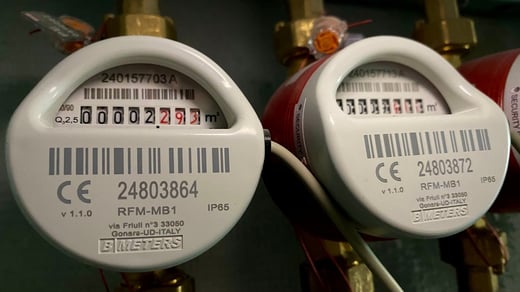
How multi-site retailers use ISO 50001 and IoT to cut energy and risk.
Why multi-site retailers are turning to ISO 50001 and IoT
European retail chains operate thousands of energy‑hungry sites—supermarkets, hypermarkets, convenience stores and distribution centres—under increasing pressure to reduce emissions and operating costs. Rising energy prices, electrification of loads such as refrigeration and EV charging, and new reporting duties under CSRD all push retailers to understand, control and optimise their consumption.
Many groups have adopted ambitious science‑based targets, but translating those commitments into day‑to‑day store operations is challenging when data is fragmented and responsibilities are diffuse. ISO 50001 offers a structured way to close this gap. As an international standard for energy management systems, it provides a framework for defining energy policies, setting objectives, and managing performance in a continuous improvement cycle.
For multi‑site retailers, adopting ISO 50001 at scale means moving beyond ad‑hoc efficiency projects and turning energy management into a core capability embedded in facilities, operations and corporate governance. For a retailer operating across multiple countries, the benefits extend beyond cost savings.
A well‑designed energy management system creates a consistent language and process for energy across stores and regions, simplifying the integration of acquisitions and new formats. It also provides robust evidence for CSRD-compliant reporting on energy use, emissions and efficiency projects, reducing the manual effort needed each reporting cycle.
When ISO 50001 is combined with digital monitoring and an Enterprise Asset Management (EAM) platform, it becomes possible to link each improvement action—such as upgrading refrigeration plant or optimising lighting—directly to both financial and environmental outcomes. This combination of governance, data and digital tools is increasingly what investors and regulators expect from leading retailers.
Designing an ISO 50001-ready data and governance model
To turn a standard into day‑to‑day practice, retailers need a data and governance model that serves both store managers and corporate ESG teams. On the data side, the foundation is a single, governed list of sites and meters. Each store, distribution centre and office is described in a central system with attributes such as area, format, climate zone, operating hours and equipment profile. Meters and submeters are then mapped into a hierarchy that reflects how energy flows through the site—main incomers, HVAC, refrigeration, lighting, EV chargers and so on. ISO 50001 requires organisations to define an energy review and identify significant energy uses, which becomes far more robust when supported by a clean, hierarchical meter model rather than a spreadsheet of account numbers.
On top of this physical model, you define standard data fields and KPIs. Common examples include kWh/m², kWh per transaction, base‑load consumption and load factors for key systems. These metrics are calculated centrally, using data streamed from IoT meters and building management systems where available.
A modern Enterprise Asset Management platform, such as Nextbitt, can act as the integration layer that links energy readings, asset information and maintenance history, turning stores into comparable units in a group‑wide energy performance dashboard (Nextbitt platform overview). This same layer supports CSRD reporting by providing traceable energy, water and refrigerant data for ESRS disclosures. Governance completes the picture.
ISO 50001 emphasises leadership commitment, roles and responsibilities, and performance evaluation. In a multi‑site retailer, that translates into a clear division of tasks between central energy managers, regional facilities teams and store staff. For example, central teams set targets, analyse performance and design campaigns; regional teams coordinate technical interventions and vendor contracts; store managers ensure local behaviours—such as opening hours, temperature settings and equipment shutdown—align with guidelines. Regular management reviews, supported by standard dashboards and variance analyses, help leadership track whether energy objectives are on course and where corrective actions are needed.
Scaling ISO 50001 and digital monitoring across retail chains
Scaling ISO 50001 and digital energy monitoring across a retail chain is a multi‑year journey, but early movers show that the effort pays off. A leading Danish retailer implemented a multi‑site energy management system covering around 1,000 stores and achieved 24% energy performance improvement over six years, translating into roughly 137,000 MWh of savings and USD 29 million in avoided energy costs (Coop Danmark ISO 50001 case study). Their approach combined centralised governance, rigorous data collection and continuous investment in efficiency measures, from refrigeration upgrades to behavioural campaigns.
For other retailers, a phased roadmap can follow three steps.
-
First, pilot: select a few representative stores and a distribution centre, connect key meters via IoT gateways, and implement a basic ISO 50001 management cycle—Plan (baseline and objectives), Do (operational controls), Check (monitoring and KPIs), Act (corrective actions).
-
Second, standardise: capture lessons from the pilot to define technical standards, procedures, training materials and templates for energy reviews and action plans.
-
Third, scale: roll out the reference model region by region, supported by a central platform that automates data collection and reporting.
Integrating the programme with EAM ensures that energy anomalies become work orders, and that upgrades are tracked with expected and actual savings. Throughout, communication and recognition help sustain engagement. Store managers and technicians need to see how their efforts—closing doors, resetting schedules, reporting faulty equipment—translate into visible KPIs and financial results. Sharing league tables, success stories and best practices between sites can foster healthy competition and accelerate adoption.
As digital monitoring matures, retailers can experiment with more advanced use cases: dynamic setpoint optimisation, demand response participation, and integration of EV charging and on-site renewables into the energy strategy. In doing so, ISO 50001 ceases to be a compliance exercise and becomes a framework for ongoing innovation in how the chain uses and manages energy. For EU-based retailers subject to CSRD, this journey also strengthens the credibility of sustainability disclosures.
With auditable data and documented processes behind every energy and emissions figure, finance and ESG teams can confidently explain performance trends to investors, regulators and customers. Platforms like Nextbitt, which bring together asset, energy and sustainability data, make it easier to keep this information consistent across hundreds of locations and multiple reporting cycles
Nextbitt smart and sustainable ops platform
.png?width=50&height=50&name=baixados%20(1).png)
.png?width=162&height=30&name=NB231228_wordmark_black_rgb%20(1).png)