.png?width=162&height=30&name=NB231228_wordmark_black_rgb%20(1).png)
.png?width=50&height=50&name=baixados%20(1).png)
Most organizations now accept that sustainability cannot be treated as a year‑end reporting exercise. Customers, regulators, and investors expect full lifecycle visibility: not only how assets perform today, but their impact from manufacturing and transport, through years of operation, to end‑of‑life and circular recovery.
Asset managers, however, still live in a world dominated by CAPEX and OPEX. Capital budgets and maintenance costs drive replacement decisions, while lifecycle carbon, Scope 3 emissions and circularity are handled by a separate sustainability function—often in different tools, with different data.
This is a missed opportunity. When lifecycle assessment (LCA) principles are connected to asset data and everyday maintenance decisions, organizations can answer questions that spreadsheets alone cannot solve:
-
Should we extend the life of an aging chiller or replace it with a more efficient model?
-
Which asset classes contribute most to our lifecycle emissions and ESG commitments?
-
How do we prioritize investments when we care about cost, reliability and climate impact at the same time?
This guide explains how to bring LCA thinking into asset management, and how an asset‑centric platform can make lifecycle decisions repeatable, auditable and operational.
What lifecycle assessment actually measures
Lifecycle assessment provides a structured way to quantify the environmental impact of a product or asset across its entire existence, typically from cradle‑to‑grave:
-
Extraction and processing of raw materials
-
Manufacturing and assembly
-
Transport and installation
-
Use phase (operation and maintenance)
-
End‑of‑life (reuse, recycling, disposal)
Across this lifecycle, LCA frameworks track multiple impact categories, such as:
| Impact category | What it measures | Why asset teams should care |
|---|---|---|
| Climate change | Greenhouse gas emissions in tCO2e | Energy use, refrigerants, fuel, supply chain |
| Resource depletion | Use of metals, minerals, fossil resources | Long‑term material risk and circularity |
| Water use | Freshwater withdrawal and consumption | Cooling systems, process water, local scarcity |
| Toxicity & pollution | Human/ecosystem toxicity, eutrophication | Chemicals, lubricants, end‑of‑life treatments |
Two insights are particularly important for asset managers:
-
Operational energy is not always everything. For some assets, energy consumption dominates; for others, embodied impact from steel, electronics and manufacturing is comparable or higher.
-
End‑of‑life can be a lever, not just a cost. Choices around recycling, refurbishment and resale can significantly reduce net lifecycle impact and improve financial return.
The goal is not to turn every maintenance engineer into an LCA expert, but to use these principles to improve everyday asset decisions.
The CAPEX paradox: cost‑driven vs lifecycle‑driven decisions
Traditional asset strategies are driven by a simple equation:
-
Extend life to spread CAPEX
-
Repair as long as it is cheaper than replacement
-
Replace only when reliability or cost becomes unbearable
This leads to a paradox:
The cheapest choice on a three‑year budget horizon can be the worst when viewed over a 15‑year lifecycle, especially once carbon and regulatory risks are taken into account.
Consider a common scenario:
-
A 12‑year‑old HVAC unit operates at low efficiency and uses a high‑GWP refrigerant.
-
Repairing it costs a fraction of a new system, so the instinct is to “keep it running.”
-
A high‑efficiency replacement has higher upfront emissions from manufacturing (embodied carbon) but will consume far less energy and use a more benign refrigerant across its useful life.
Without lifecycle data, it is almost impossible to judge whether repair or replacement is better for the business and for climate targets. With lifecycle thinking, the decision can be reframed around:
-
Total emissions over the remaining life of the current asset vs a replacement
-
Payback time in both financial and carbon terms
-
Regulatory and reputational risk linked to older, less efficient technologies
Three dimensions of lifecycle impact for assets
To make lifecycle thinking operational, asset teams should consistently evaluate three dimensions for their major equipment classes.
1. Embodied impact (before the asset arrives on site)
Embodied impact refers to everything that happens before the asset starts operating:
-
Materials and components (metals, plastics, electronics)
-
Manufacturing processes (energy‑intensive steps, heat treatment, machining)
-
Transport to site and installation
This is where LCA models and supplier disclosures - such as Environmental Product Declarations (EPDs) - are most useful. They provide per‑unit estimates of embodied carbon and other impacts.
For asset managers, embodied impact matters when:
-
Choosing between suppliers for capital equipment
-
Considering refurbished vs brand new assets
-
Designing specifications that favor longer life and higher reparability
A long‑lived, repairable asset might have higher upfront impact than a cheaper alternative, but a significantly lower impact per year of service.
2. Operational impact (while the asset is running)
Operational impact covers everything that happens during the service life of the asset:
-
Energy consumption (electricity, gas, fuel)
-
Water use and discharges
-
Consumables (lubricants, filters, chemicals, spare parts)
-
Unplanned downtime leading to inefficient back‑up systems
This is where an asset platform is critical. It tracks:
-
Runtime hours, load profiles and efficiency over time
-
Energy and water use by equipment and by site
-
Maintenance events that degrade or improve performance
For many energy‑intensive assets, the use phase dominates lifecycle impact. Improving efficiency by 20–30% can outweigh embodied emissions by an order of magnitude over 10–20 years.
3. End‑of‑life impact (when the asset is retired)
End‑of‑life is often treated as a pure cost. Lifecycle thinking reframes it:
-
Which materials can be recovered and recycled?
-
Can the asset be resold, refurbished, or used as a spare‑parts donor?
-
What regulatory obligations exist for safe treatment (e.g., refrigerants, batteries)?
Design and procurement choices made years earlier—such as modular architectures or standardized components—determine how much value can be recovered and how much impact can be avoided when the asset is decommissioned.



Turning lifecycle thinking into replace‑vs‑repair decisions
The most tangible way to bring LCA concepts into operations is to embed them into replace‑vs‑repair decisions for critical assets.
A practical framework:
-
Establish the baseline
-
Asset age, condition and historical reliability
-
Current energy and resource consumption
-
Expected remaining useful life
-
-
Model the replacement scenario
-
Efficiency and performance of a new asset
-
Expected lifetime and maintenance profile
-
Embodied carbon and other impacts from producing and delivering the new equipment
-
-
Compare lifecycle outcomes
For a defined time horizon (e.g., 10 or 15 years), compare:-
Total expected emissions: current asset vs replacement
-
Total cost of ownership: repair, energy and maintenance vs new CAPEX plus lower OPEX
-
Payback time in both financial terms and carbon terms
-
-
Include end‑of‑life value
-
Residual or resale value of old equipment
-
Recycling or material recovery benefits
-
Cost and impact of disposal
-
When this logic is built into an asset platform, teams can evaluate scenarios quickly and consistently, instead of treating each replacement as a one‑off spreadsheet exercise.
Data foundations: what your platform needs to know
Lifecycle‑informed asset decisions depend on data you already collect or can realistically gather, not on perfect scientific models.
Asset data
-
Unique identifiers, type, model, installation date
-
Power rating, capacity, major components
-
Location and operational context (base‑load, backup, seasonal)
-
Criticality for operations or safety
Performance and consumption
-
Energy use by asset or system (from submetering or allocation)
-
Water use and relevant process flows
-
Maintenance history, including major repairs and component replacements
-
Downtime and impact on production or service levels
Lifecycle factors (external and internal)
-
Typical embodied carbon values by asset type (from public databases, supplier documents or industry benchmarks)
-
Grid or fuel emission factors for each geography
-
Estimated end‑of‑life recovery rates (what proportion of material can be recycled or reused)
The asset platform becomes the place where all three streams converge. It does not need to reproduce specialist LCA tools; instead, it needs to apply lifecycle factors to actual asset data and surface the insight in a way maintenance, operations and finance teams can use.
Implementation roadmap: from concept to practice
Phase 1 – Visibility (weeks 1–8)
-
Build or refine a consolidated asset register for priority equipment classes.
-
Link energy and water consumption to equipment where possible (submetering or engineering allocation).
-
Establish simple lifecycle profiles for 5–10 key asset types using available factors (e.g., typical embodied and operational emissions).
Phase 2 – Decision support (weeks 6–16)
-
Configure a standard replace‑vs‑repair assessment within the asset platform.
-
Train maintenance and facility managers to evaluate major decisions using lifecycle‑aware dashboards rather than cost alone.
-
Pilot with a handful of high‑impact assets (e.g., HVAC, refrigeration, boilers, large pumps).
Phase 3 – Governance and scaling (months 4–12)
-
Include lifecycle metrics (e.g., avoided emissions from replacements) in investment cases and portfolio reviews.
-
Define thresholds where lifecycle payback clearly favors replacement or extension, and standardize decision rules.
-
Feed aggregated lifecycle data into ESG and regulatory reporting, such as climate targets and sustainability disclosures.
This roadmap does not require your teams to run detailed LCA models. It uses reasonable factors + good asset data + consistent logic to drive better decisions.
A practical example: refrigeration across multiple sites
Imagine a food processing group with several plants, each with dozens of refrigeration units of different ages and technologies.
Initial situation
-
Energy is measured at site level, not per system.
-
Replacement decisions are made locally and reactively (“fail and fix”).
-
The sustainability team estimates emissions using top‑down factors, without asset‑level detail.
After implementing lifecycle‑aware asset management
-
All refrigeration units are registered in a single platform, with age, capacity and type.
-
Energy use is allocated to major systems, giving a view of which units are most intensive.
-
A standard lifecycle model estimates embodied and operational emissions for each unit over a chosen horizon.
-
Replace‑vs‑repair assessments rank units by combined financial and carbon payback.
Within the first year, targeting the worst performers can:
-
Reduce energy use and emissions from refrigeration by a meaningful percentage.
-
Provide a quantified “avoided emissions” figure that feeds directly into climate reporting.
-
Create a repeatable template for other asset classes (HVAC, compressed air, pumping, etc.).
The key enabler is not a specific LCA tool, but the integration of lifecycle concepts into the same place where asset, maintenance and consumption data already live.
FAQ: lifecycle assessment for asset managers
Is full ISO‑compliant LCA always necessary for asset decisions?
Not usually. For operational decision‑making, streamlined lifecycle assessments using credible factors and ranges are enough to compare options and see whether replacement or repair is clearly better.
Do we need specialist sustainability software before we start?
No. The most important step is to structure your asset and consumption data and agree on decision rules. Specialist tools can refine your factors later, but they are not a prerequisite for making better choices.
What if suppliers cannot provide embodied carbon data?
You can still use published benchmarks and generic values by asset type or material. As supplier transparency improves, you can update your factors without changing your decision logic.
How does this relate to Scope 1, 2 and 3 emissions?
Asset lifecycle data touches all three: direct fuel use (Scope 1), purchased electricity (Scope 2), and embodied impacts from equipment and materials (Scope 3). Asset‑level visibility makes climate reporting more concrete and auditable.
Will this slow down maintenance and replacement decisions?
Not if handled well. The goal is to provide a simple, guided assessment in the platform that highlights when the answer is obvious and only escalates complex trade‑offs.
Where does an asset platform add value compared to standalone LCA work?
Stand‑alone LCA is powerful but often remains in reports. An asset platform connects lifecycle logic to real‑time data and workflows, making lifecycle‑aware decisions part of daily operations instead of a one‑off study.
Traditional vs lifecycle‑informed asset management
| Aspect | Traditional approach | Lifecycle‑informed approach |
|---|---|---|
| Primary decision driver | Short‑term cost (CAPEX/OPEX) | Total cost + lifecycle emissions + risk |
| Time horizon | 3–5 year budget cycle | Full asset lifetime (10–30 years) |
| Data basis | Age, failure history, repair cost | Asset data + consumption + lifecycle factors |
| Sustainability treatment | Separate report, top‑down estimates | Integrated, asset‑level, bottom‑up |
| End‑of‑life | Disposal cost | Circular recovery and residual value considered |
| Governance | Local, ad‑hoc decisions | Standardized rules and thresholds in platform workflows |
How an asset platform operationalizes lifecycle thinking
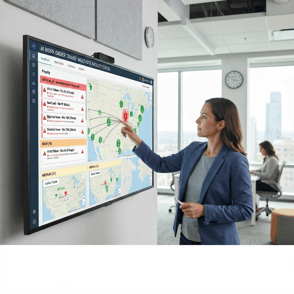
Nextbitt's asset‑centric platform can make lifecycle thinking practical by:
-
Centralizing multi‑site asset inventories and performance data.
-
Connecting energy, water and consumables to specific systems.
-
Embedding lifecycle factors into calculators and dashboards that support replace‑vs‑repair, technology selection and investment prioritization.
-
Providing traceability for ESG and regulatory reporting based on real operational data.
Instead of competing with specialist lifecycle tools, it complements them by making their concepts usable where decisions are made: in maintenance planning, capital budgeting and operations.